

Bioalchemy: A Personal Introduction
Adrián Villasenor Galarza
Bioalchemy represents an inward exploration, a reaching into the depths of being to rescue invaluable pearls of relational wisdom. It is a deep exercise of self-exploration; an attuning to the natural forces surrounding us, in which the deep voices emanating from the inner soulscapes of human and nature intermingle in ways that intimately speak of integration and wholeness.
As such, bioalchemy is a pleasure and a pain, a joyful hardship in which relinquishing the tight grip of the logical and rational is required in order to open up to the soul’s stirrings, at once personal and cosmic. In what follows, I will provide a concise introduction to bioalchemy by focusing on its beginnings and two key notions that help give it shape.
Bioalchemy is the coming together of bios, “life,” and alchemy, or the “black art of transformation.” Alchemy has been defined in many ways and has been practiced and studied through a variety of lenses.
One of my favorite definitions of the black art was given by the late Terence McKenna: “alchemy is the secret tradition of the redemption of spirit from matter.”1 Hence, bioalchemy refers to an organic and ecological approach to the inner dimension of the world, alluding to the real possibility of sustainable transmutation of people and planet. In attempting to give voice to the particular approach and gifts of bioalchemy, it is helpful to briefly return to its beginnings.
Beginnings
Years back, a friend and I started a small permaculture project in Guadalajara, Mexico, centered on compost-making and its commercialization. Shoveling, carrying, mixing, collecting dung, and being in constant contact with fermented materials were the order of the day. Since it was a grassroots, hands-on project, the process required great diligence from us in paying meticulous attention to a multiplicity of factors, including temperature, water, particle size, aeration, and the quality and harmonious integration of the components.
We managed to create compost of fairly good quality, and together with our environmental education activities, “Centinelashi” (as we named our compost) became somewhat recognized locally. When trying to name the dance that took place between the compost heap and our body-minds, two of my great loves surfaced: ecology, in which I had formal training, and alchemy, a mysterious spiritual tradition found the world over and to which I had felt a strong connection since early in my life. Bioalchemy was born from the fermenting transmutations of the breakdown of organic matter and the relational wisdom that comes from consciously participating in nature’s cycles.
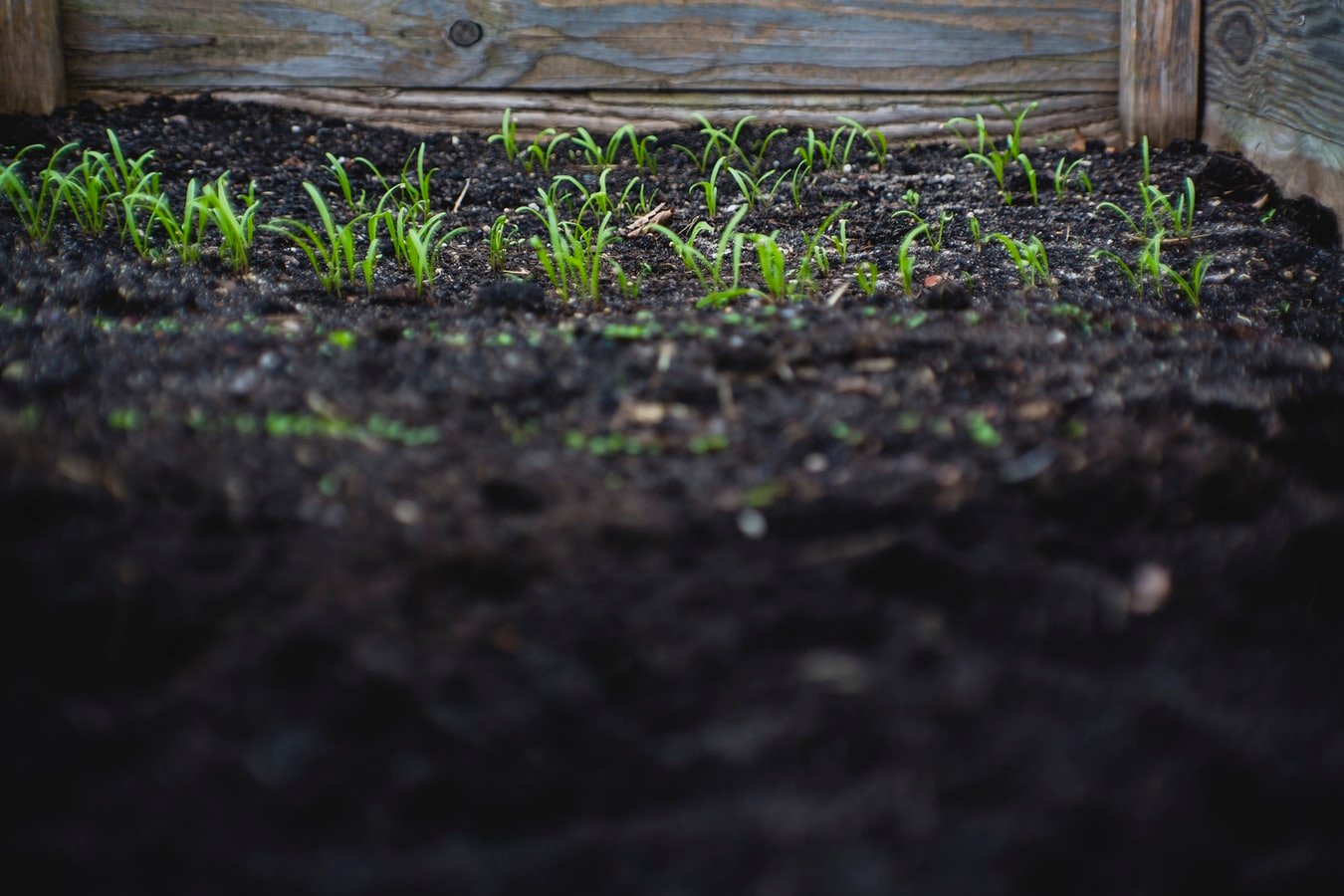
With every moon that wanes and waxes, the possibilities of bioalchemy’s bounty become evident as its seedlings sprout. The more I learn to be guided by this deep, fertile knowledge, the more alive the plantlets become in the soul’s soil. The more attention I lend to the seedlings’ growth, the more clarity I gain as to their wants and needs. A fertile, restorative cycle is created. In following and tending to this cycle, I have come to understand that bioalchemy’s strength lies in its implicit relationality (Latin relationem, “bringing back,” “restoring”), expressed in the connection between the movements of the soul and those of nature.
With its strong emphasis on relation, bioalchemy can be understood as a process of restoring or bringing to conscious awareness the covenant between humans and nature. The recognition that the deepest yearnings of the human soul are intimately related to the activities of non-human beings and ecological cycles presupposes the restoration of the inherent value of nature. That is, bioalchemy serves as a lens that enables us to see and celebrate the ecological, psychological, and spiritual dimensions of nature and how these dimensions exist in intimate relation to the human domain.
In order to gain a better sense of what bioalchemy can offer, let us review the first of two key notions: the realm of relation known as metaxy.

Realm of Relation
Metaxy is a Greek preposition literally meaning “between.” However, in Plato’s Symposium, the priestess Diotima, when questioned by Socrates about the nature of Eros (god of love), referred to him as being “half-way between [metaxy] mortal and immortal,” adding that “everything that is of the nature of a spirit is half-god and half-man.”2 Metaxy is transformed and elevated into a symbol: a chimerical state of being that pervades the world. For Diotima, then, the whole human experience was scented with the aroma of relation, for the intermediary realm of the metaxy was in charge of binding reality in dynamic community. At the same time, the relational realm represented the conundrum of the human condition and its latent possibilities.
The metaxy was seen as the glue that held together the worlds of the human and the divine. The intermediary realm of relation allows communication between the natural world, the sacred, and humanity’s essence by serving as a bridge between spirit and matter. The metaxy, as the dwelling place of Eros, holds nature in dynamic tension and communion, propelling the world to manifest in infinite relation—a state of continual conviviality between the subtle and the material, within and without.

Multidimensionality
he second key bioalchemical notion, implicit in the metaxy, is that of multidimensionality. The widespread notion that the world is a one-dimensional entity composed solely of matter is a recent development that reduces the mystery of who we are and where we live to a flat expression prone to control and domination. Yet traditions the world over have conceived of nature and humans as multidimensional. The three dimensions of matter, psyche, and spirit are commonly considered to provide the structure of the world, which in turn manifests in human form. The subjectivity of nature, constituted by the dimensions of psyche and spirit, and its relation to the human are essential bioalchemical recognitions.
The multiple dimensions of reality translate into an equal number of states of consciousness that allow us to perceive and enter into relation with them. Ken Wilber’s first book made way for a better understanding of how states of consciousness determine what and how we perceive and live in the world, and how the variety of these states is akin to a spectrum.3
From a bioalchemical perspective, the spectrum of consciousness is akin to a spectrum of relationality; the way we relate determines the way we are and where our consciousness rests. A more encompassing view of the human discloses the possibility of entering into more refined and symbiotic ways of relating to nature. The freedom and fluidity afforded by a multidimensional spectrum of relation can aid us in transcending the parasitic, competitive, and predatory modes of relation that underlie the functioning of industrial societies.
Self-discovery in Nature
The goal of bioalchemy is to promote a journey of self-discovery by focusing on the manifold modes in which we relate to nature. Contemplation, guidance, surrender, and discernment of the cycles and patterns of nature help us tune into the soul’s rhythms, for our innermost depths and wildest dreams share the same soil as the redwood tree and the sunflower.
The adventure in which psyche and nature, inner and outer, intermingle and reveal their intimacy is seen as necessary not only for our personal and collective unfolding, but for the well-being of all creatures. The metaxical capabilities of humanity are to be released from the prison that prevents them from entering into meaningful contact with the mother of all sages: nature.
Bioalchemy points toward the possibility of personal transfiguration guided by nature. I tasted the quality and importance of the deep transformation offered under the guidance of nature by deepening the relationship between the external odors, textures, and varied materials we used in composting and my own body and mind.
Quite a few times, while watching the compost heap transform, I thought to myself: “This is just pure magic.” It didn’t take me long to arrive at the conclusion that the compost heap was indeed a living entity, full of its own needs and developments that resembled the processes taking place within me. There is a particular joy when one enters into a fuller, more conscious relationship with the rest of nature.
Adapted from: Adrian Villasenor-Galarza, Bioalchemy: On the Transformative Belonging of Nature, Humans, and Soul (CreateSpace, 2015).
1 Terrence McKenna, “Unfolding the Stone: Making and unmaking history and language,” http://deoxy.org/media/McKenna/Unfolding_The_Stone
2 Walter Hamilton, The Symposium by Plato (Baltimore, MD: Penguin Books, 1965), 81.
3 Ken Wilber, The Spectrum of Consciousness (Wheaton, IL: Theosophical Publishing House, 1977).